
Showing posts with label health education. Show all posts

Thursday, March 24, 2016

New Study Finds Link Between Sleep Apnea and Cancer Growth

More than 18 million Americans are affected by sleep apnea, a disease that works by interrupting the ability to rest soundly. It might even affect your partner's ability to rest due to loud snoring. However, according to some recent data, the side effects of sleep apnea could actually be more dangerous than interrupted sleep. Results are now linking sleep apnea to the growth of cancer. Specifically, through blood vessels and how quickly they are able to expand through tumors.

These same researchers explain that intermittent hypoxia (lack of oxygen flow) "is associated with worse mortality and aggressiveness in some types of cancer." 

This blood vessel link was found through the use of mice and kidney cancer. By exposing the mice to various levels of oxygen, they found that tumor-based blood vessels were more likely to form and expand, growing the tumor overall. Whereas, in those who received steady oxygen flow (and in higher levels), the same was not true of the affected blood vessels. 

However, facts are still in the works. While this correlation certainly seems disheartening in theory, there is plenty to be learned and addressed between sleep apnea and it's ongoing side effects. They also pointed out that more links need to be made – and a varied test model – before the data is applicable to humans. Including looking for exceptions in particular, the researchers said. 

Instead, the current facts that were obtained from mice can be used to find more information, as well as how to better study sleep apnea as a whole and how it might affect any type of body.

To learn more about sleep apnea and how it can affect your health outside of sleep, talk with your doctor. Then be sure to check back in for more sleep-related news.

Tuesday, February 16, 2016

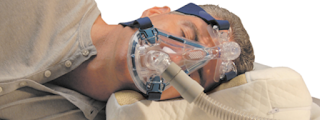
How do CPAP Pillows Help CPAP Therapy?

CPAP Pillow from Contour - We make CPAP Easier
If you've been reading our blog, you've heard about CPAP therapy and you understand the perks. You've also heard about the add-on accessories, like cleaning wipes and the importance of keeping your mask clean. Overall, you understand how the treatment, as a whole, can help to treat sleep apnea. But have you heard about the pillows yet? Do you know what these things can do?

CPAP pillows are specialty designed to work with your treatment, not against it. With specific cutouts and a shape that cradles the mask, sleep apnea suffers don't have to worry that their equipment might get in the way of comfortable sleep. (Because let's face it, without comfort, it's pretty hard to actually sleep.) CPAP pillows also make space for breathing tubes, so you can eliminate as much stress from the process as possible. 

With CPAP pillows, you can use your sleep apnea treatment to the highest level of efficiency. Because your equipment is made to work with one another, there's no logistical issues, such as a mask not fitting or a tube that gets caught up in the fluff.

So how do CPAP pillows help CPAP therapy? By making each night as restful as possible, and by allowing the machine to do its work with a nighttime routine that doesn't obstruct. While still offering a supportive sleeping surface, CPAP pillows allow the machine to do its job. 

If you're suffering from sleep apnea, a CPAP pillow can greatly enhance your nightly treatments. Talk to your doctor about available models, or head to the Contour Living page in order to learn more, and what they can do to better enhance your treatments. 

Or, ask a representative via live chat to gain immediate answers to your pillow-related questions. 

Tuesday, March 24, 2015

Learn How to Get Better Rest with Sleep Innovations

As partners in the good-night’s-sleep community, we’re out to educate the public on anything and everything associated with rest. In fact, it excites us. That includes products that will help them become more comfortable, to healthier resting habits, and more. One our latest projects combines all of the above. 

With Sleep Innovations, a unique combination of articles – and the help of Media Planet – readers can gain the information they need to get better rest. And because Media Planet focuses on advocacy and research in natural healthcare advances, readers can rest assured they’re gaining access to innovative and cutting-edge materials. 

There’s even a section with Arianna Huffington, who discusses the importance of rest, as well as the moment she realized just how precious good sleep can be. By hearing from experts and understanding general opinion, in one easy-to-read place, those of all backgrounds and situations can gain a better scope of public opinion. For instance, what’s normal when you’re trying to rest, and what might be cause for alarm. As well as what steps to take in order to improve one’s sleeping patterns. Maybe even all of the above. 

Products, educational programs, and more are also shared within the publication. The website even tackles additional health issues, such as bone strength, lymphoma, what causes kids to snore (and why it might be unhealthy), and more. With this well-rounded approach, readers can gain access to health conditions that encompass their sleeping habits (and what might affect them), as well as those that are beyond those nighttime resting patterns.

An all-over approach to getting educated about the human body and all of its intricate parts. 


To learn more about what Sleep Innovations has to offer, or to start reading your way to better health today, head to FutureofPersonalHealth.com

Tuesday, February 4, 2014

10 Surprising Causes to Chronic Back Pain

For most, the thought of chronic or ongoing back pain sounds like a life sentence. Because it’s generally caused by an injury or intricacy of some kind (muscle spasms, pinched nerves or discs, etc.), these pains can be hard to locate, let alone cure. And unfortunately, for some folks, that remains true. For the majority of the population, however, back pain is often caused by simple everyday occurrences.

But by not understanding the cause(s), these behaviors are repeated and lead to even more painful symptoms. And believe it or not, the causes can be as simple as what you eat. How many of us wouldn’t change our diets if it would reduce or eliminate pain?

Check out these everyday activities that can lead to back pains.

  1. Failing to exercise – without regular movement muscles can become strained and stiff, often leading to pain. 
  2. Bad shoulder posture – slumped shoulders can realign the back and refocus where weight and muscles rest.
  3. Smoking – unhealthy and a steady habit, smoking can reduce oxygen and blood flow, among other medical issues. Without blood making its way through the lower back, pains are likely to develop; smokers suffer from back pains twice as often as non-smokers.
  4. A bra that doesn’t hold its weight – Without the support of a bra, the body is forced to pick up the slack on its own, causing excess weight toward the front of the body.
  5. Stress – When you can’t relax, all sorts of side effects take place, including that of manifested pains. 
  6. A poor diet – taking in too many fats and calories is bad for the body in more way than one. Avoid these foods when back pains occur.
  7. Sleeping on an old mattress – Without nighttime support, the back can strain and take on extra weight, resulting in lower back pains. 
  8. Heavy purses – Over time, carrying a purse can wear down muscles and put strains on the shoulder, all the way down to the lower back.
  9. Office chairs – Because they’re sat in for hours on end, office chairs should cradle and align the back, not bring on extra pressure. The same goes for the rear’s portion of the chair. 
  10. Too-worn shoes – Feet can be directly linked to a number of areas in the body, including the back. Without proper protection and weight displacement, that lack of reinforcement can often be felt elsewhere.

Tuesday, January 21, 2014

Blood Pressure Monitors now Available at Contour Living

In an ongoing effort to make your healthcare needs as simple as possible, Contour Living has added yet another aspect to its repertoire: blood pressure monitors. Check your blood pressure after a meal, when heading to the gym, or as often as the doctor prescribes. For those who need daily – or even hourly – readings, to those who want to see how the ticker is doing after a solid work out, we now have the monitor(s) to meet your needs.

Choose from manual cuff models, those that can read your stats in one touch, or a heart rate monitor watch, which provides real-time changes as they’re happening. They take the guess work out of heart-healthy planning. Each model offers a specific set of options for those off all health needs. Whether it’s a doctor-ordered necessity or just an easy way to check up on your blood pressure health, these monitors help make everyday readings a hassle-free (and pain-free) process.

The Perks of At-Home Blood Pressure Monitors


With a monitor at home – or at the office – there are plenty of perks to be had. You can easily cut back on doctor visits, and have an accurate idea as to how your blood pressure is holding up throughout the day. That way actions can be taken for you to stay in tip-top health. For peace of mind no matter what your activity or diet, consider one of our new monitors.

And best of all, they’re on sale! As an introductory offer, all our blood pressure monitors can be purchased for a fraction of the price. Take advantage of this “new guy” sale and get the medical equipment you need in the process.

To learn more about our blood pressure machines, or to find out which model will best fit your needs, click here.